

When we began the descent to Entebbe, I finally understood why the pilot had said it was going to be a very cloudy journey. He had said it in a very nonchalant, almost casual way, “Please keep your seat belts on at all times. It is going to be cloudy.”
He had flown creatively over the blazing hot orange desert, unlike the standard straight way planes always flew. Instead, we were leaning sharply to the right against the rising landscape. The tilt of the land below reminded me of O’ Level Geography again, where they had taught us that Africa is tilted to the North. Though, because of the white flat-roofed blocks of evenly lined cities which popped up after long empty spaces, we were probably still on the Arab Peninsula at this time; this was where the huge labour migration of African workers was taking place.
When the pilot announced the descent, we were suddenly we hit by a thick almost impenetrable carpet of white clouds. The plane struggled through, jerking us about in our seats. I stared outside the window, breaking my gaze to bring to mind the image of us on the tarmac at the Entebbe’s deserted beach corners driving out of the airport zones which had come to mind about two days before. I looked down at the children who were deeply, restfully asleep as we pierced determinedly ahead, suddenly so small against the wind, machine against nature.
Just before you land in Entebbe, you see green hills, brown inroads and numerous metallic roofs shining as they reflect the sun, then just as the wings expand and the wheels come out, the lake appears before you, deep dark blue, but calming and assuring and just then, the racket hits as the plane touches down at a furious speed.
This time, nothing even showed that we were close to the ground, neither land nor Lake Victoria. We only knew we had touched down when we felt the wheels on the ground. My neighbour allowed himself to wake up. He was visibly relieved for someone who had been asleep since take off.
I braced myself for angry immigration officials as is the custom. Instead I got skipped through the line because of the children. After about forty minutes I requested for permission to take the children and collect my luggage after and it was granted without much fuss.
My father, whom you can count on for all the big important things, was waiting for me as soon as I came out, as he had said he would. Along with my sister, they received the children and I walked back into the airport building. Every airport official on duty I passed on the way shone with pride in the new arrivals expansion.
It was about two hours after we arrived when I finally got my suitcases. They were the last on the carousel. I was surprised to find that they seemed untampered with; maybe it was because they had gigantic children’s toys. I had been certain that the airport officials had broken into them again as they had in January so I made sure that the men with ‘special official’ badges who were helping the very un-official looking NAM delegates with their luggage heard me clearly. Thieves. Mediocrity. Why did we always do the worst we could? They must have known that help- less people have only words left for their defense because they ignored me completely.
At home, I fell back into an immediate dead end maid search again as I scampered for my bearings. The floor was so caked with dust that our footprints looked like we had not worn shoes in days. The air I let in from the outside was worse than the dust inside. It was heavy with burning things. It smelled like charcoal and polythene; dark, dense and stagnant.
I took down the curtains and nets the next day and the children slept better and began a time lag adjustment. On one day, the youngest child slept for an entire day. After that, for about a week they both woke up between 10 p.m. and 1 a.m. and slept again at 5. a.m. and then eventually 7. 30 a.m. At first, I was happy because I got to spend the days alone; sprawled on the chairs, waking up only when mosquitoes located me. Eventually, they aligned to the time quicker than I did. I was as tired as I could be; but you can only lie on the floor for so long, you still have to pick yourself up and find some food for everyone.
The maid culture today is roughly, get a stranger off the street, leave them with your children and trust that they will be okay. It seems that as long as the house is meticulously mopped, the children are vaselined and there is food on the stove, everything is okay. That may have worked in the 90s when we were growing up but as an adult and I suppose a young mother myself, it feels torturous.
Though, those days I think most of the maids [known as house girls, not house helps, maids or nannies], were related to us or had been recommended by one or two referees from the same village as our parents- where people knew each other’s families.
Still, my own mother was a stay at home mother in the 90s. The term then was housewife. I think she disliked the word. I didn’t know what it meant, but I knew she was always in the vicinity somewhere. A generally happy childcare except for a few holidays when an older cousin bullied me and another cousin sometimes. Me, for being a spoiled child who reported everything to my mother and my other cousin for being ‘big-headed’.
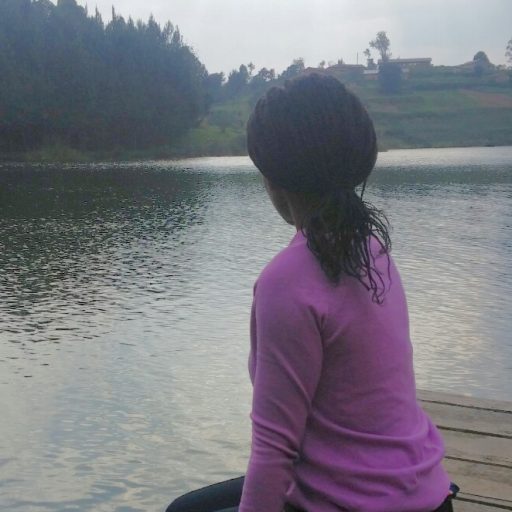
What happened to the sun? It has been so grey for weeks since we came back that there has been no difference between morning and evening. It feels like a season called “rock bautumn“.
*
It did come out two days ago and its been blazing as if it never left. I wondered momentarily, if it was actually worse that we had been under an endless dull smoky haze, breathing through the mouth its warm stale air. I think the sun is better, if not for the skin, at least for the mind.
 PurplePretoria