
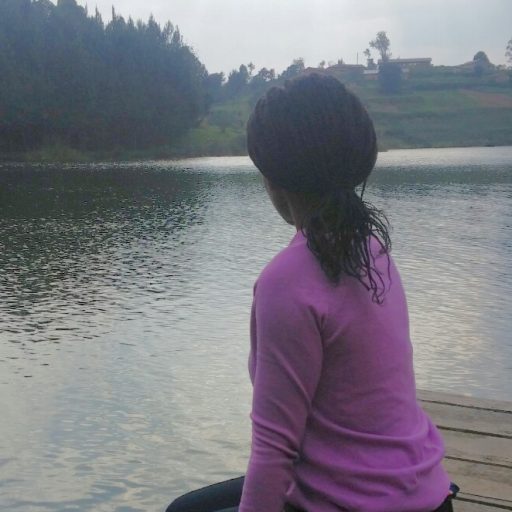
To whom does this land belong?
…
It’s the year 2037, we are 45. You have registered to go with the first batch of people migrating to other planets.
“I thought you said this was the last time,” I say, exasperated, forcing my voice to go lower.
“It will be good for the kids,” he says, looking away as he does when he has already made up his mind about something yet introducing it as new.
“The kids are adults, or at least about to be,” I respond, halfway already defeated.
“The Universities are good on Mars. Trust me.”
…
I had driven, on the highway that evening, the duskiest I had ever seen, a deep grey in the distance, clouds coming down halfway, a layer of orange light separating the grey and the brown hazy uneven structures on the earth. We did not talk much. Surprised I did not cry, he had asked me if I would. I had laughed in reply, the tears in my eyes retreating.
I didn’t cry for maybe the next eight months. When I did, it was because a huge anchor had again broken off my ship and I was left terrified, finally truly alone, as I drifted slowly away, towards the unforgiving sea.
America, is a place which only existed in an alternative world. A place where the people on my podcasts lived, where women with block heels and long colourful nails angrily splashed champagne onto their men’s faces at parties, where people spoke with a strange twang or a reconstructed English. It was also a place where Black Lives didn’t matter and guns were an everyday accessory to anyone who cared to buy.
I was okay if I never reached this part of the world. It has never been my dream to travel the world. It comes constantly as a nightmare, a shiver of fear as I am shot up in the sky in a metallic machine, 40,000 feet, floating in the sky with three hundred other strangers, unseen and unheard except by the last goodbye, with a strained and tested hope of one day returning to earth.
Now, I was to do it with my other halves, the children who have filled my life with amusement, joy, laughter and company, both wanted and exhaustingly unwanted many times.
I stopped breathing. I do that sometimes. The veins on my neck raised, stiff, in an inhale that never lets out, a self preservation skill. It is said in the Evolution Theory that animals either adjusted to extreme climatic changes or went extinct; adapt or be left behind, forgotten.
I had been looking at the time over and over again and it turned out that I was doing this every thirty and twenty minutes. I’m surprised that nobody drops into a sweating, muttering, haggard nervous mess from claustrophobia or a fear of heights. Most people seem to fall easily into a deep trusting sleep, head back, mouth open, bodies limp with abandon, for hours.
My most welcome breaks are for food, which distracts me for maybe an hour. Since I had two young children with me this time, it was a worthy occupation, making sure no one threw their food on to the floor, swung it off the tray or poured water on top of their head and into the seat. This I preferred over toilet duty in an excessively dirty, tiny space which my five year old kept running to, the two of us, sometimes three inside, barely able to turn, each episode worse than the last.
I was relieved when we finally made it across the Atlantic Ocean. I thought about the black skinned people who had made this journey in months which I had made in 8 hours. As we approached, I was convinced that we were flying over the rocky mountains in Canada, holding onto something familiar because of O Level Geography. The relief was vast, rocky and unoccupied, just red mountain and nothing, no human establishments. It remained this way for a long time.
To whom does this land belong?
We touched down in San Francisco about four hours later. A sandwich I had accepted a few minutes before touchdown, led to my entire pack of suitcases being re-checked and thrown open at Passport Control. The airhostess who given me the sandwich had started off with a disapproving, knowing look and even advised me to have something else, when I had asked for sparkling wine first thing and then when her prejudice had been unsatisfied, she had shifted to a more than necessary check-in on me and the children with a plastered pained smile.
‘Millet flour’. The Asian looking Passport Control official read out loud. He seemed disappointed that there wasn’t more. He turned away with a self-consoling ‘I just got myself lunch!’ to which his fellow young colleagues loudly approved as he held, triumphantly, the sandwich, which I had accepted only to be polite.
I was determined to speak in as African a way as I could so that I would not be mistaken for a rebellious local and therefore be easily forgiven for whatever official or cultural indiscretion I made, not that I was good at imitating accents.
Strangely, I did not stand out even half as much as I had stood out in my South African house of residence. There were so many people of brown to yellow shades, no one speaking, ‘purely’ without ethnic influence.
I struggled through the winding immigration lines. I was tempted more than once to place down my baby and set up camp on the ground. My baby, disturbed by the unusual and extremely tiring mode of sleep insisted on lying flat as though he was in a bed yet I had only my hip and weary burning shoulder to offer; a shoulder which I had disfigured to hold him up.
My other baby, had been working hard since our first check in at the airport at home, pushing suitcases, making sure nothing was left behind. He finally gave in at the end and bravely admitted that he had enough. ‘Mummy, I’m tired’. This then became a song as it becomes whenever I do not act immediately upon his request. They both had done more than I could have asked and for him, all while dealing with occasional sharp rebukes about what he had done wrong. I thanked him for his help after.
A quarter way through our journey, in Doha, we had received access to an exclusive lounge where we had met an Irish family. There were astonished by my older son’s ‘very good English’ and almost visibly shocked by his not abnormal youthful vigour, excitement and confidence and then when his little brother starting humming, what they thought was the alphabet, what his father thinks is Twinkle Twinkle Little Star and what I suspect could be either, they began to ask some questions, not knowing how to act stereotypically and then immediately acting stereotypically.
The very welcome food and rest held me up a lot longer and filled my mind with philosophical thoughts on race, class and colonialism which was a welcome break from the dreary exhaustion of my journey.
The first difference between America and home was that, there was no visible surveillance anywhere, not one soldier in sight. On the contrary, I was afraid of the Mexican looking bad guys at the mall, who had stood leaning against their car, four men against one car, puffed jackets, staring fiercely at anyone who dared to look their way, definitely armed, I had thought. I had worried about where the police was. I had also woken up one night to check if the house was fully locked. I think it made me uneasy that there was no burglar proof iron bars at the door. There were no keys either and when I opened the door and it went all the way, my body went weak. I hadn’t known that the door was closed only from the outside but as soon I opened it from the inside, it would always open.
When I first saw my closest friend of fifteen years outside the Arrival doors, he was as he had been, ever brisk with emotions, barely looking up, greeting me with an unconfident touch on my shoulder. He had decided to park the car and send his friend whom I had never met to meet me and the children. I had, barely been able to manage a grimace which I usually would. I am conditioned, since about the age of eight, to prove kindness with my actions or facial features. It began when my over seriousness in primary school was branded by a popular girl as ‘mean’, in her exact words. She had seen my inability to interact with boys easily and my being a stickler for the rules as an assault to her own aversion to rules and intense curiosity towards boys and their reaction towards seeing the outline of her tiny legs through her uniform. I have over the years received more psychological thrashing for continuing to be too serious, from classmates, colleagues, and relatives close and far, eventually, melting into a pleasing, personable still not so approved bearing.
I may have managed to raise an eyebrow at the stranger talking to me, calling me Maama so and so. Even though, I finally feel old and tired enough to put my hair into locs, a reference to me as Maama by someone who is not my child is like a veil thrown across my face immediately covering my true identity. I may have flinched, but I followed him outside unable to say one more word.
For the next two days, I remained on my feet, as if I had travelled from Namugongo to Kampala even though I had travelled across more than one day and night.
On the third day, I failed. The youngest refused to stop screaming. I run away from them both and called my backup who had gone to run an errand. He is always half-amused when I show any sign of weakness when it comes to domestic issues. I make a good superwoman, on the outside. I fell across our bed and slept from midmorning until late afternoon. I woke up guilty, daring myself to be better.
Ever since I became a mother, I learned quickly that I was mostly alone. Somewhere in my identity crisis, I also faced the existential crisis of what it means to be a mother in general. Is the child of a mother promised everlasting love? What makes one offspring more deserving of love than another? What did I have to do to be loved? To let my guard down, to be loved when I cannot get up, to be loved when I have nothing to give back. Neither lowliness, a hopeful expectation of future strife nor beauty, grace or successfulness had been enough.
My guard had been up long. I found it hard to smile easily at first. Live in this moment, I thought I heard a voice say. Then I spoke up. Me, what about me, think about me, too. Suddenly, we were a family. It was us, it was him, it was me.
Slowly, the muscles on the left side of my face let go. I exhaled. I woke up one morning totally happy.
*
Thank you for the time of my life.
*
What I have seen about life, is that you have to run most miles with a stone in your shoe.
*
“Zennn, you can’t open the door when childrens are susuling.”
*
“Mummy, the clouds look like posho.”
*
“This duck tastes like roasted socks.”
*
“Mummy, I saw God crying, ” he says.
“Where did you see God? People have been looking for him.”
“When we were going to the airport… I saw God crying.”
“Why was God crying?”
“Because He doesn’t have friends.”
*
“Aunty Karungi, Zedd said I am a bad boy chicken”
“Zedd, did you say that?”
Whispering, “Suka say I am a bad boy chicken?
“Zedd is a bad boy chicken!”
“Mummy, Suka said I’m a bad boy chicken.”
I laugh. They sit gleefully, quiet and contented.”
*
 PurplePretoria