Scovid or Scovida, as the child had named her, walked in through the front door; head bowed like someone who had been caught red-handed being herself. Although her name was Scovia, she had come at a time when the word COVID was ever present around the house and, the little boy learnt new words by rhyming them with old ones he already knew. We found her new name hilarious. I thought it was by chance that I had heard him connect some words this way before but it really came to me, this technique of his, when I found out one of his first friends at school was not called Bathroom but Jethro [-om].
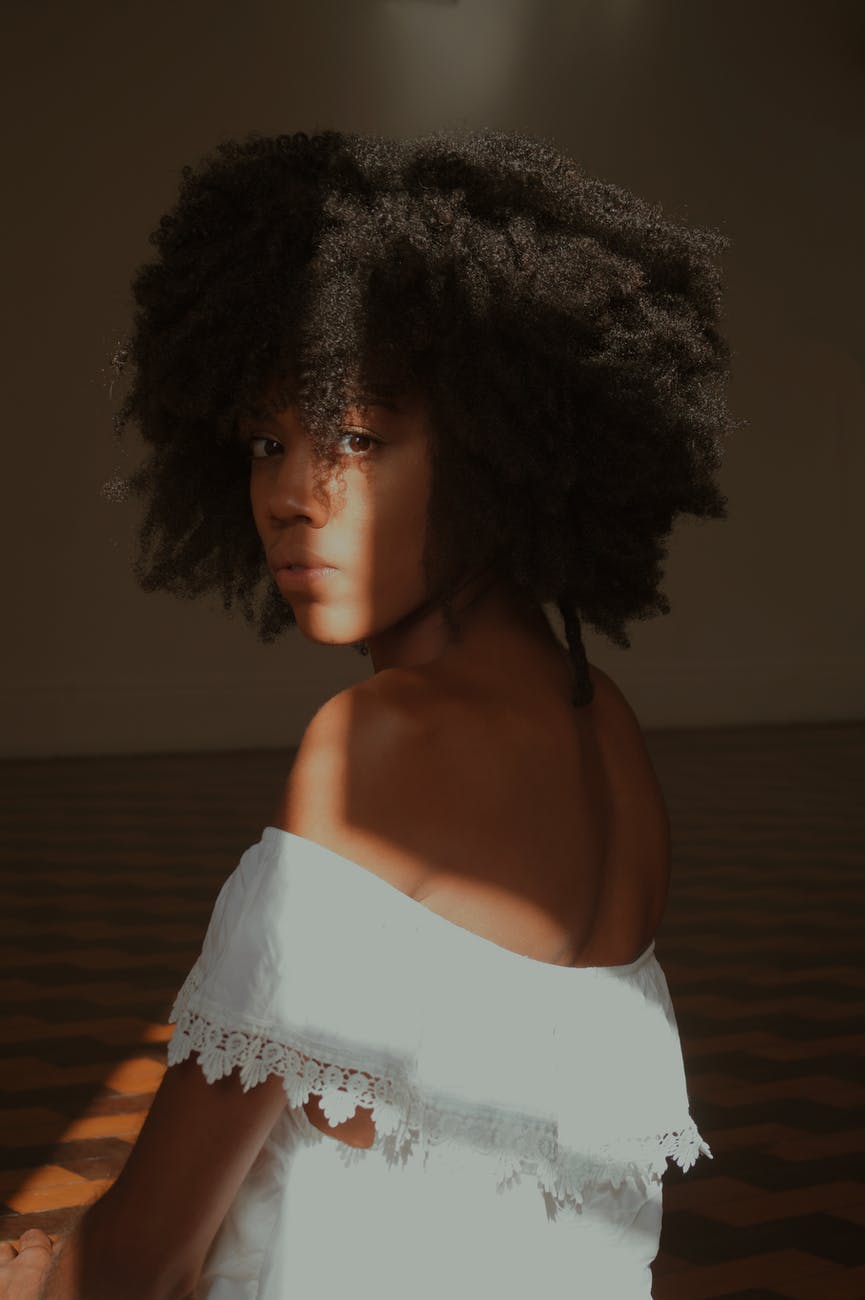
The braids that Scovid chose were just like mine. I knew they would be similar because she had asked me what my hairstyle was called. I thought a pencil Kiswahili would suit her, since she spent most of her time in the house cleaning it or within the compound walls running after the child or gossiping with the other maid.
She did try to make hers a little bit distinctive from mine; with light brown streaks running through the off-black fibre in a shoulder length and wavy fashion. The last time I had suggested that my house-help should go to the salon and have her hair plaited, she had left within a month. Something told me to just watch and see.
That very night, I heard her, for the first time, hurl an insult. I think she had probably hurled insults at me before or at least at the runaway father of her child but she always spoke in her language when she was on the phone. This time, I was walking past the counter on my way out of the kitchen when she re-entered, after an intense phone call to a village mate and said with an unusual forcefulness, in an accent that made the word sound a little less English and a little more African, “Nonsense!”
After that, I saw a small red hand-mirror with melted flowery plastic petals glued onto the round edges lying by her bag. I had not known that she owned a mirror within the only one cloth bag that held all her belongings.
She regards me with suspicion every time I tell her to do something. She observes me with a focused gaze to see whether I will treat her differently now that I can see that we are both women. It is for this same reason that I don’t tell her my age, because it might be hard for her to accept that we are the same age but we were born in different lives. It reminds me of my first maid Carrot. For her, it had not been because she felt we were equals, it had been because she had judged herself better but that life had dealt her a bad hand.
Becoming a mother for the first time was like getting a new hairstyle. While I had feared that it would diminish me, and in a way it did because I have little time to be my ‘self’, it had instead broken me down into pieces and rebuilt a more resilient version of me. I finally understood the meaning of time, how it slipped through the cracks, how to measure it- in blocks- the time when the baby was sleeping, the time when baby was awake- the time to drink water so I could pump milk- the time to pump- the time to eat- time when the house was quiet. Time.
It no longer went unnoticed. Now, I would know the pain of stagnation, the pain of waste.
When I came here, I had just turned 23. It was two months after University and the memories of my quiet life between my residence and the University lecture halls were still fresh. The law building was all glass. They said it was because they wanted to show that the law was just and transparent. I think I have always felt safe just focusing on the current, what I could see, what I could do. I hadn’t thought about what would I do when I left Hatfield, so he had thought for me. I would go to an internship in a nice country, and after that, work in a community organisation. I was after all, malleable, soft, kind, peaceable. I didn’t go.
A haggard insecurity haunts this place. The discomfort brought forth by my presence alters something in the atmosphere. I’m not a disrupter. I had always been content to flow behind the wind that blows the curtains. I suffer under its gaze, this expectation, this fury, this separation, this isolation, this fight.
Today, as I walked out onto the greyish parking lot of the mall where I had taken refuge, it dawned on me, in the hot heavy undertone of the air before a storm falls, that the most difficult part is, I had wanted to stay. I had wanted it to be the one. I had accepted any kind of treatment because, I would be the one who did not stir trouble. I would be the one who dwelt overburdened and unseen- like a sea creature under still water. I had wanted to be the one who stayed.
 PurplePretoria